

How to Instantly Improve Your Squat
Saratoga Springs Chiropractors, Dr. Favro and Dr. Campbell break down the squat pattern to help you improve athletic performance and reduce injury.
The squat…
Love it or hate it you are going to have to do it on a daily basis. Whether it’s part of your workout routine, getting into your car or sitting up from the dinner table the squat is truly a functional movement.
What if the way you were squatting on a daily basis was contributing to nagging low back, hip or even knee pain? Most patients enter our office with the goal of getting out of pain. But when there is no clear mechanism of injury to cause their symptoms, we have to start looking at the way they move to perform everyday tasks. This is why an exam that includes assessing functional movement is so important. If we can identify limitations that are contributing to altered movement patterns, we can then design a program to enhance the way someone moves thus reducing pain.
When you perform movement evaluations as often as our doctors do you start to notice common patterns. Based on the most common faults or limitations we see with the squat pattern we wanted to share our top 3 exercises to help our readers feel better and move better!
Ankle Mobility
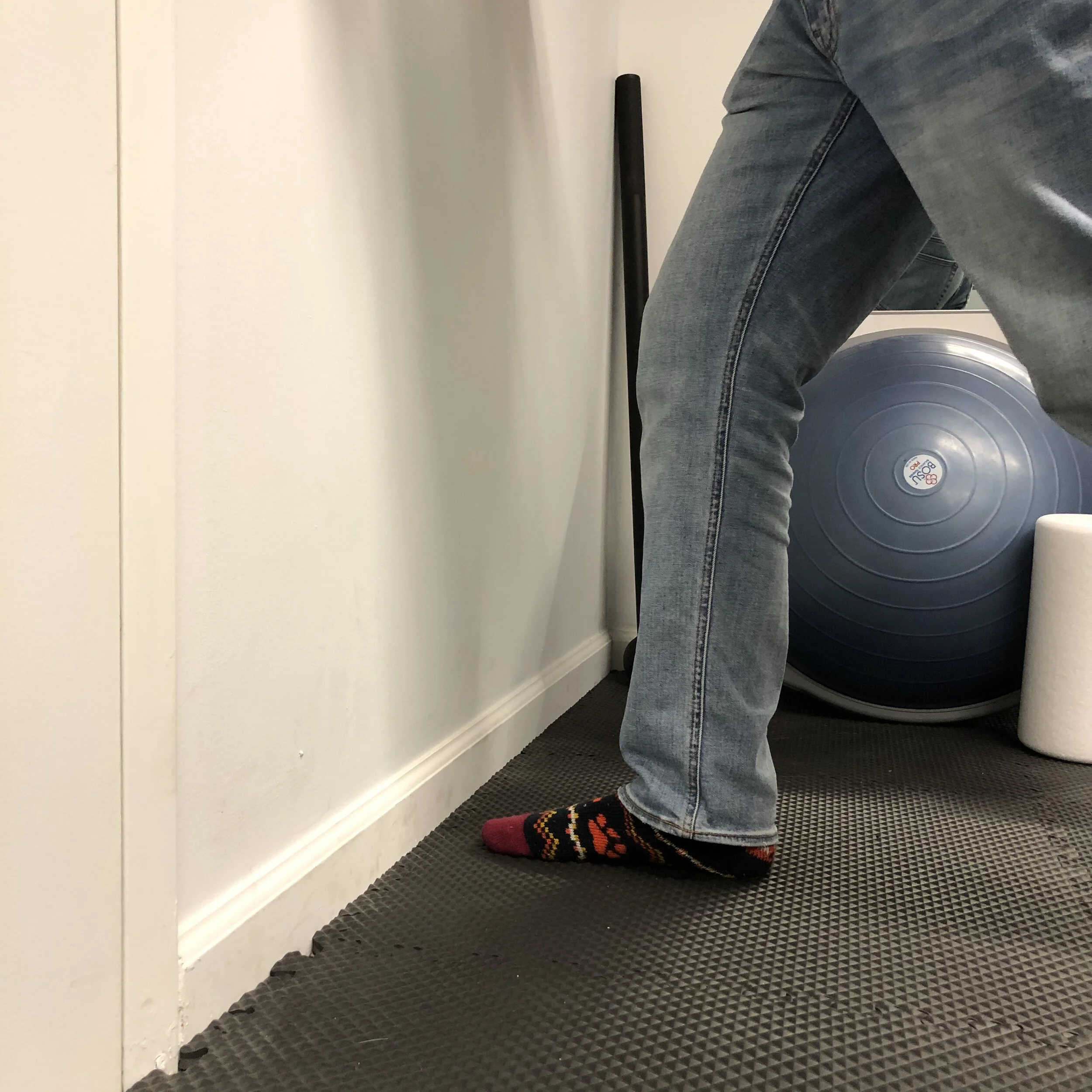
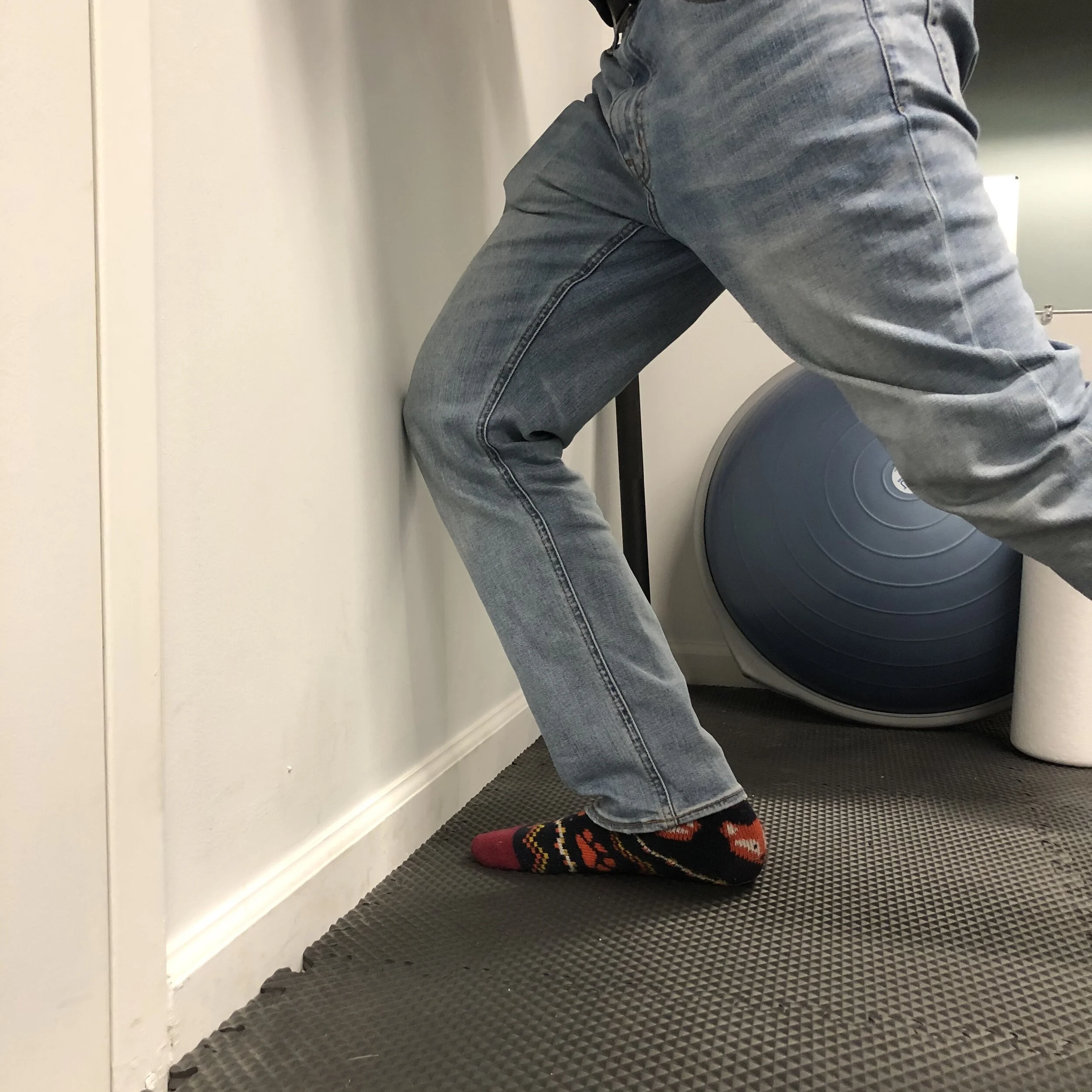
Our first exercise is to improve the range of motion at the ankle, specifically dorsiflexion. This exercise is great because all you really need is a wall. Place the foot about 4-5 inches away from the wall, keep the foot flat and try and bring the knee toward the wall. You shouldn’t experience any pain in the front part of the ankle. Hold for 1-2 seconds and perform 10 repetitions.
2. Hip Control
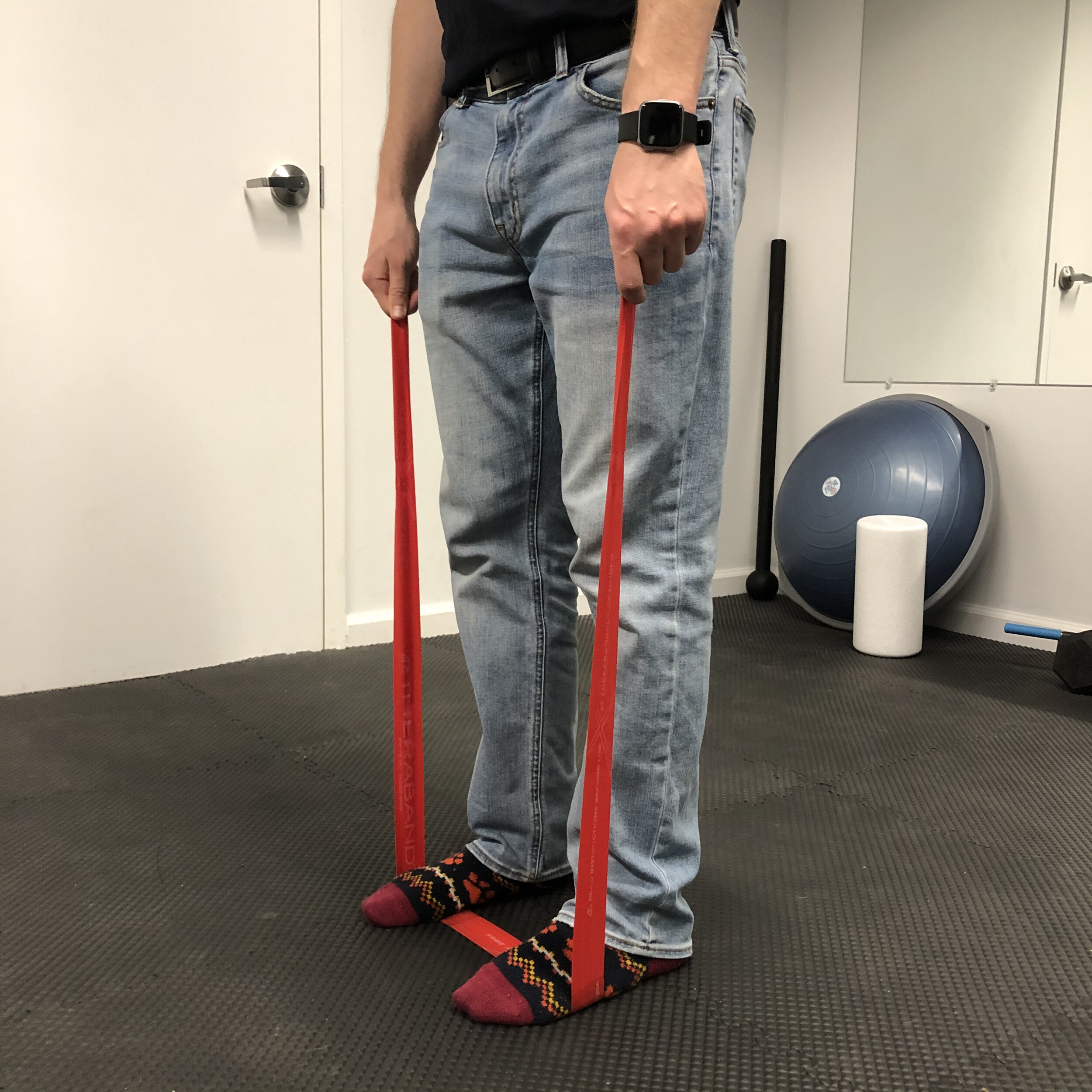
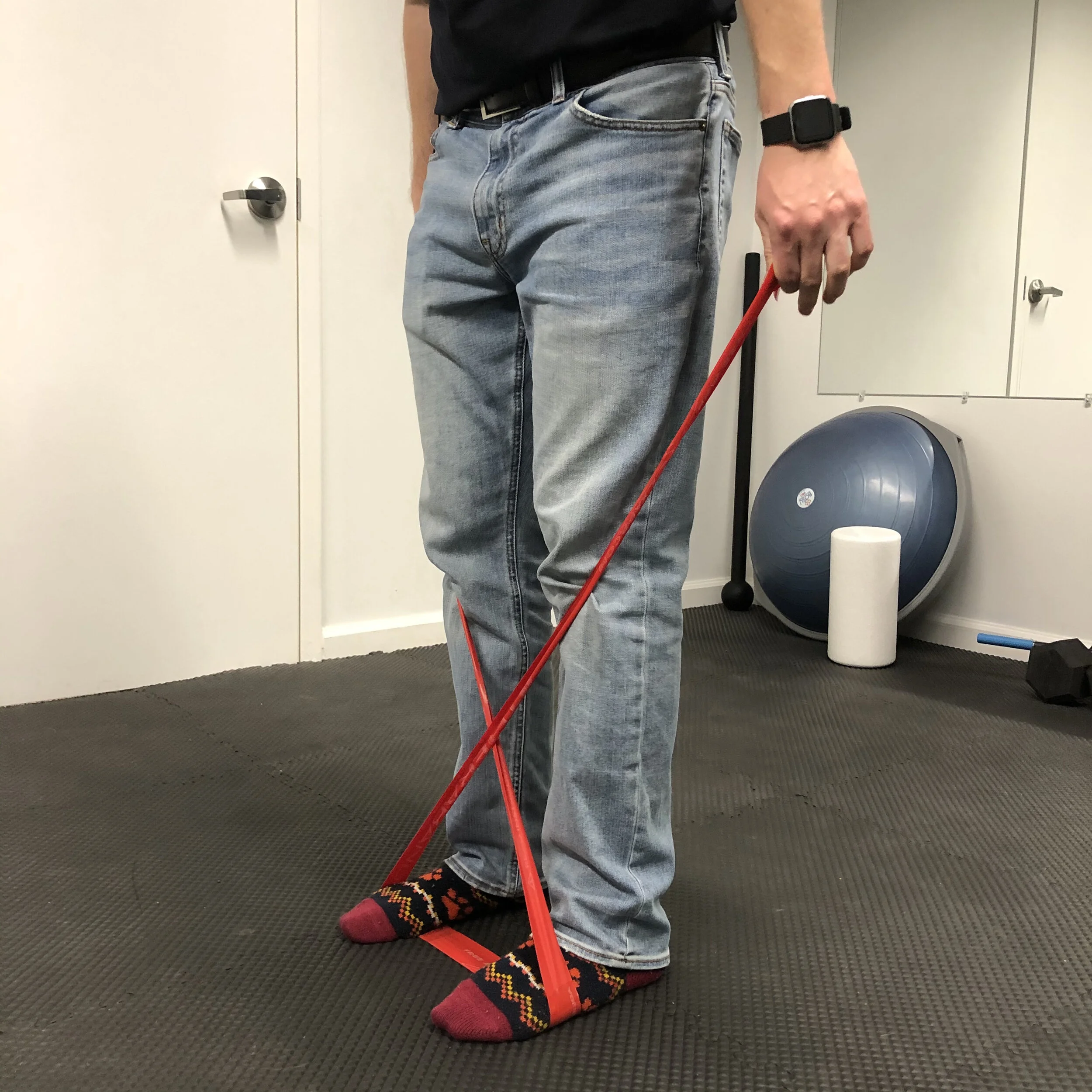
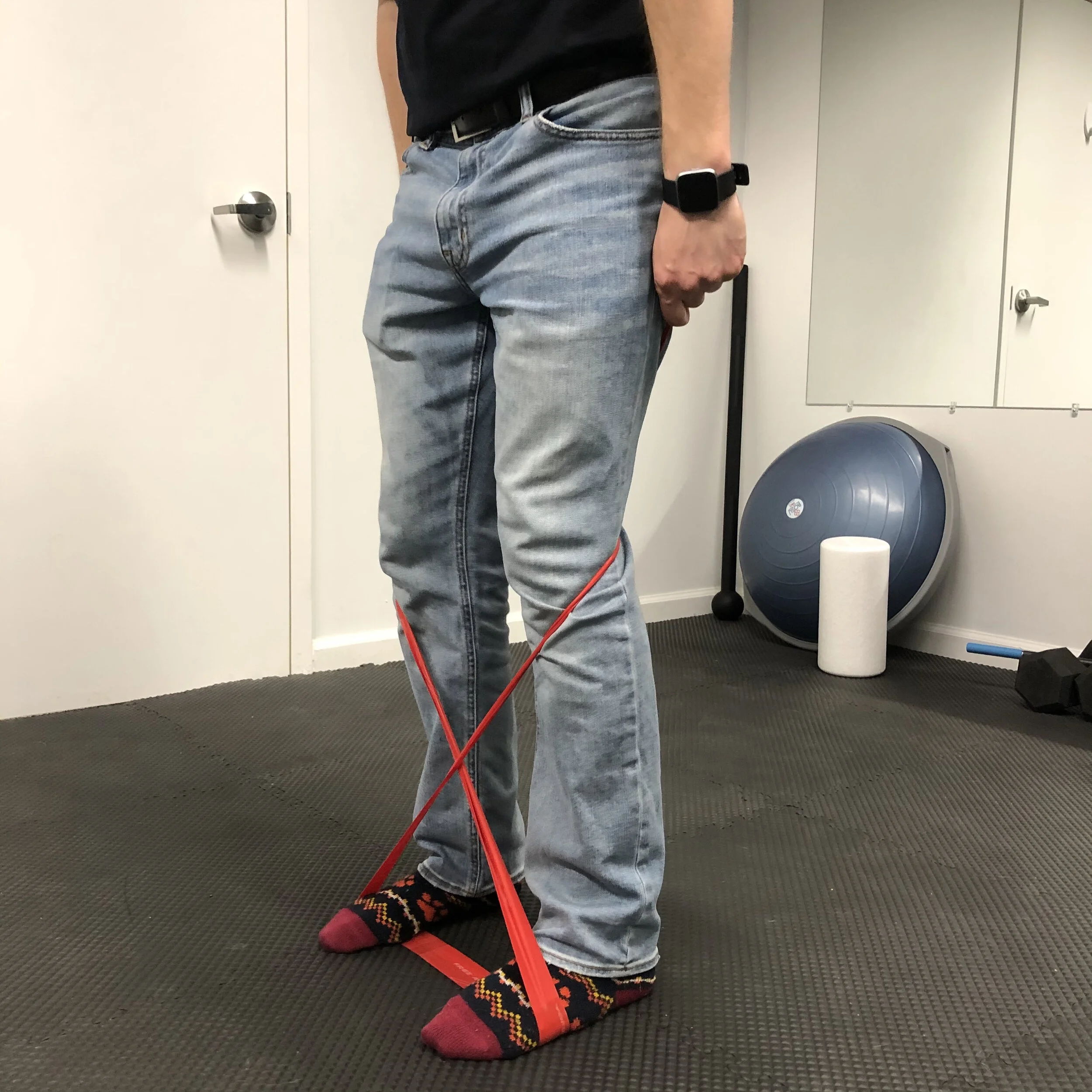
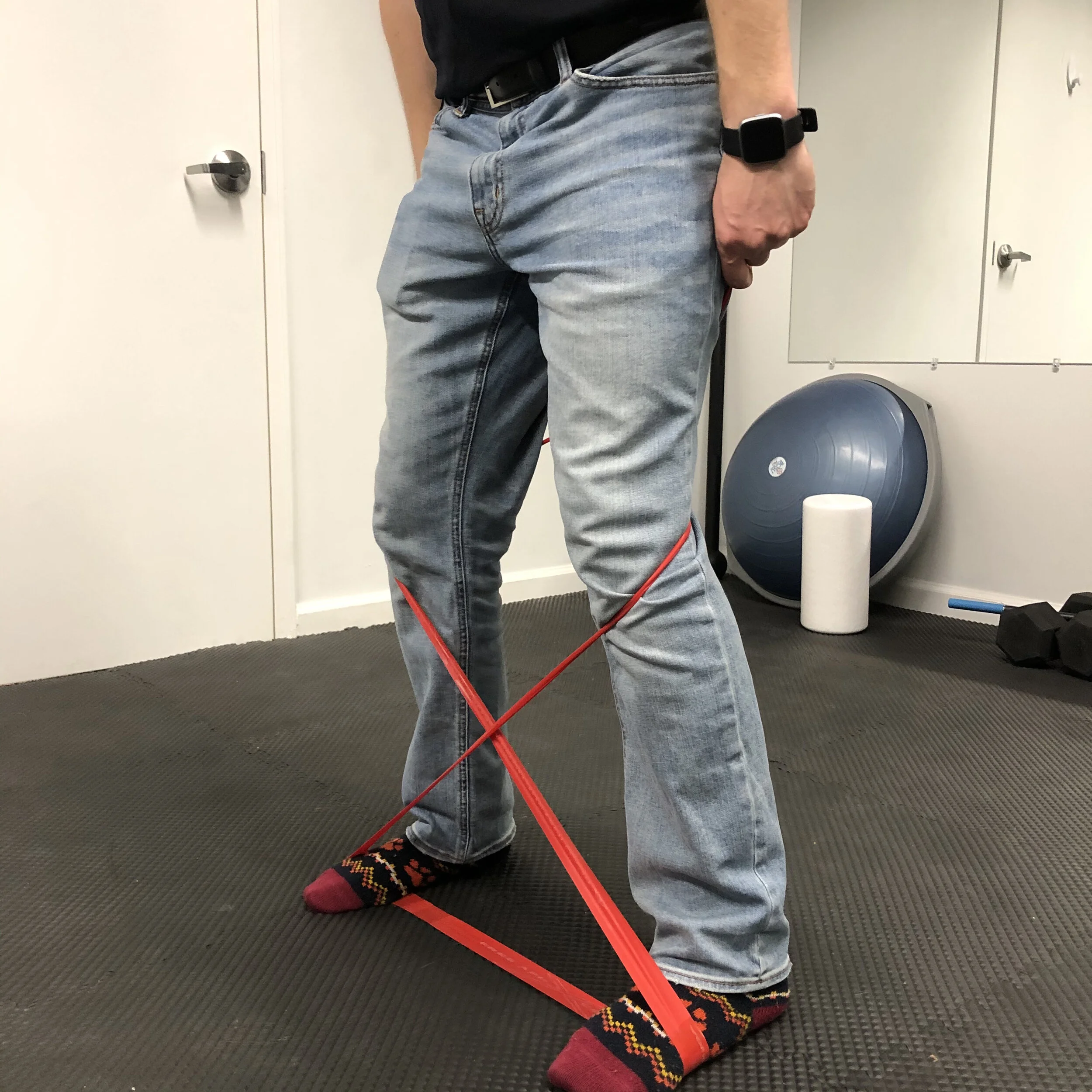
Our second exercise is to improve the ability of our hips to control our pelvis. A common fault in the squat is when the knees start to cave in. This can be problematic because it can not only irritate the hips and knees but it can also be a predictor of knee injuries in the future. To perform, grab a band and wrap it around the legs as shown below. Once the band is situated step side to side with the toes forward. Make sure you control the band. Try 2 sets of 10 in each direction.
3. Leg Torque
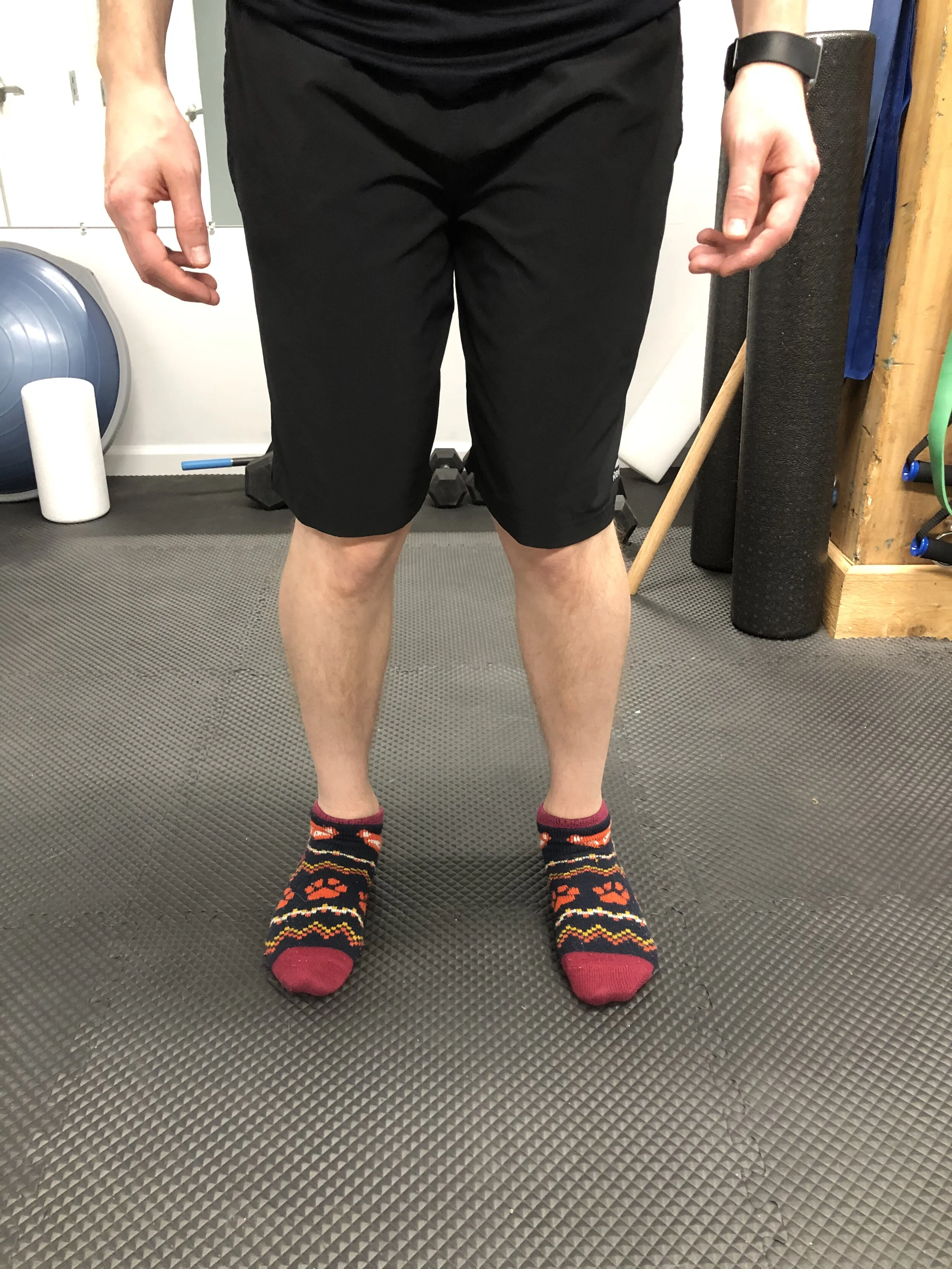
Our third exercise is all about creating tension at our feet and hips to allow our joints line up appropriately. Imagine digging your feet into the sand without actually rotating the feet out. Creating this torque, you should feel the arch at the bottom of the foot start to engage, the knees rotate out and the muscles in the hip working. Try and hold for 2-5 seconds and repeat 10 times.

For more information, including videos on how to perform the exercises mentioned above, head over to our YouTube video by clicking the hyperlink.

Heat or Cold?
Should I use heat or ice? This question has plagued athletes and worried parents for decades. This article from our Saratoga chiropractors may help solve the mystery.
The heat or ice debate seems to be one of the hottest topics in sports medicine and is certainly a widely used treatment in our chiropractic office. So which one is right for you? That depends on a multitude of things.
HEAT

Heat can be applied in a number of ways. In our Saratoga chiropractic office, we use a system that submerges packs filled with clay in a hot water bath. Once applied to the patient, this can stay warm for up to 45 minutes. The other benefit is the moist heat does not dry out the tissue like an electric hot pack would. But moist hot packs are not the only way to achieve a heating effect. Ultrasound and diathermy use sound waves and electrical currents, respectively, to vibrate the tissue and create heat. But you don’t need expensive equipment. A hot tub or hot shower can give you a similar response.
What does heat do?
Heat dilates blood vessels, increases circulation, and relaxes muscles. By improving circulation, new blood cells will enter the tissue, bind to lactic acid and other waste products of injury and carry them away. Think of this is “rinsing out the muscle”.
When do I use heat?
Heat should be used 48 hours after an acute injury or for any chronic injury that has lasted longer than a few weeks. We discourage patients from using heat for an acute injury as the body with naturally increase blood flow to that area and too much can cause increased bruising and a longer recovery.
COLD

Just like heat, cold can be applied in a number of ways. In our Saratoga chiropractic office we use cold packs that are stored in the freezer and place a sheet of face paper between the ice pack and the patient’s bare skin. This prevents any burning from direct contact on the superficial cells that don’t have as much of a blood supply. There are other ways to achieve cold therapy such as an ice bath or cryotherapy. Cryotherapy has gotten some great publicity lately for helping with metabolism and chronic injury but make sure you are properly equipped as there have been accounts of people getting burned from the extreme temperature.
What does cold do?
Cold essentially does the opposite of heat. It constricts blood vessels, reduces blood flow, and can reduce pain. When you experience an injury the body’s natural response is to increase blood flow. Blood contains the ingredients to heal the tissue. Sometimes too much of a good thing is not a good thing. Injury is one of those cases. To help people recover faster, our chiropractors need to be able to control the swelling response and cold can help with that.
When do I use cold?
Cold should be used immediately after an injury for up to 48 hours. The best way to get the most out of cold application after an injury is to move the area a little after you are finished icing. For example, if you sprain your ankle, ice it for 20 minutes then move your toes and ankle a little to prevent stiffness. At Turning Point Chiropractic we use a number of soft tissue techniques that can cause local inflammation as part of the healing process. If patient’s are sore from those treatments, ice would be a great way to calm the symptoms.
If you have suffered an injury or have any questions about whether to use heat or ice, give our office a call to set up an appointment. Our qualified chiropractors have treated thousands of patients dealing with both chronic and acute injuries and can evaluate what treatment option will be best for you.