
How to Choose the Right Chiropractor in Saratoga (And Avoid Costly Mistakes)
If you’ve ever asked, “Does anyone know a good chiropractor?” you’ve probably noticed something right away:
There are a lot of options in Saratoga.
And here’s the honest truth: Chiropractors do not all practice the same way.
That’s not a bad thing. But it does make choosing one more complicated than most people realize.
After 15 years in practice here in Saratoga Springs, I’ve found that the best outcomes happen when patients understand the philosophy behind the office they’re walking into — and feel confident that approach aligns with their needs.
So instead of simply telling you why you should choose our office, I’d rather explain what to look for anywhere.
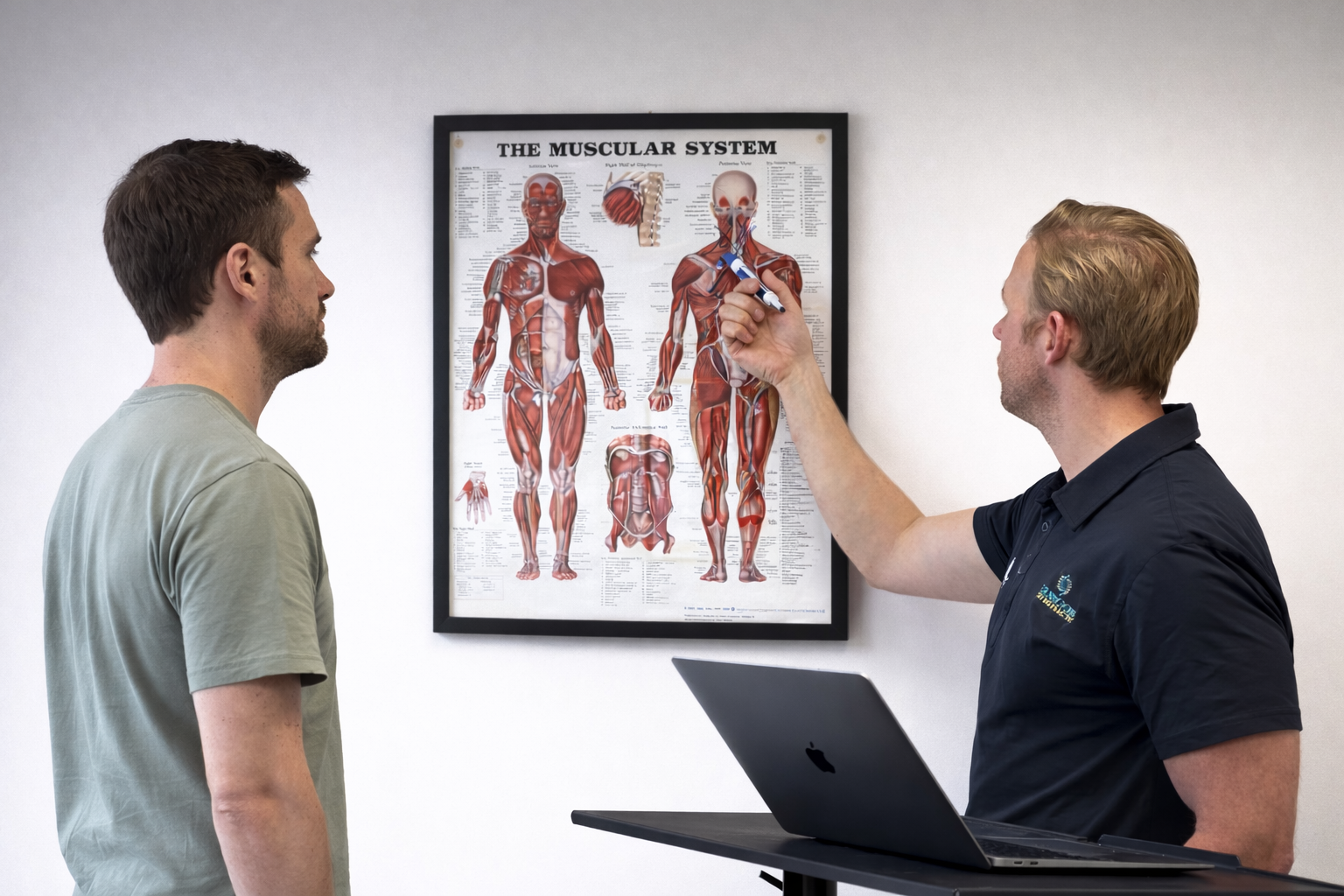
1. Understand the Philosophy Behind the Practice
The word “chiropractor” is similar to the word “surgeon” or “lawyer.” The education may be similar, but how someone practices can vary dramatically.
Some offices operate as:
High-volume adjustment models
Quick visits, frequent adjustments, repetition as the primary driver of improvement.
Rehab-heavy models
Longer sessions that may resemble physical therapy, with structured exercises and soft tissue work. Typically not reimburseable by insurnace.
Hybrid or evidence-based models
A blend of precise chiropractic care, movement-based rehab, and individualized planning focused on measurable outcomes. Billable to most insurance carriers.
Within chiropractic, you may also hear the terms “straight” and “mixed.”
A “straight” chiropractor typically focuses primarily on spinal adjustments as the central form of care.
A “mixed” or integrative chiropractor combines adjustments with rehab, soft tissue therapy, exercise guidance, and other evidence-informed treatments.
Neither philosophy is inherently right or wrong.
But they are different.
Understanding those differences helps you choose intentionally rather than randomly.
What Actually Happens During an Adjustment?
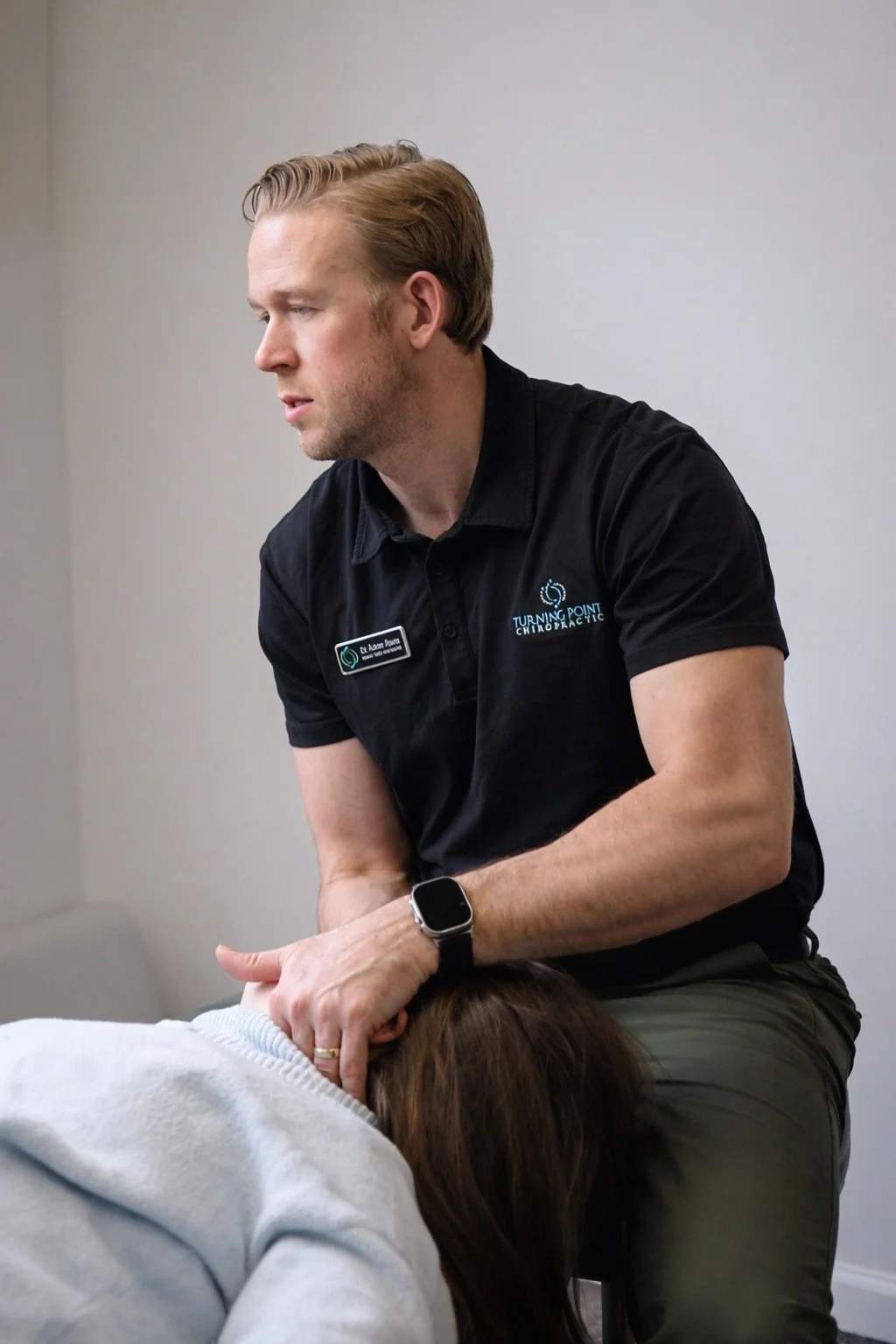
You may have heard that chiropractic adjustments “put bones back into place.”
That explanation has been used historically. However, modern research suggests something more nuanced.
The audible “pop” you hear during an adjustment is caused by a rapid pressure change within the joint — a process called tribonucleation — where gas is released from the synovial fluid.
What The Research Says:
Research shows that many of the benefits of spinal manipulation are mediated through neurological and physiological mechanisms. In other words, the nervous system’s response plays a major role in pain relief and improved mobility. This is why rehab exercises and soft tissue terapy coupled with adjustments yield the best results.
Adjustments don’t simply “push bones back in place.” They influence how joints, muscles, and the nervous system function together.
This modern understanding has helped evolve how many chiropractors approach care today.
“Although hearing that “crack” and the process of tribonucleation and the disruption of synovial fluid almost always “feels” good, research shows that the majority of changes elicited by spinal manipulation (HVLA) are mostly, if not all, mediated through neurological and physiological mechanisms and not by “clicking or pushing bones back in place” - a common and outdated misconception.”
2. Pay Attention to the Exam Process
One of the clearest ways to spot differences between offices is how the initial evaluation is handled.
Before starting care, consider asking:
How thorough is the exam?
Will the findings be explained clearly?
Is a diagnosis discussed?
Are expectations realistic?
What happens if I don’t improve?
A good provider should be able to explain:
What they believe is causing your pain
Why they’re recommending a specific approach
What improvement should realistically look like
What the next step is if progress stalls
You should never feel rushed or confused about your own care plan.
3. Is Treatment Individualized — or Standardized?
Some offices follow a very consistent, standardized approach. Whether you are experiencing a condition like sciatica or even a herniated disc, thorough diagnosis and well-planned treatment coupled with rehab exercises can maximize your recovery potential.
Others tailor care based on:
Diagnosis
Age
Activity level
Physical ability
Imaging (when appropriate)
Severity and irritability
Response to treatment
In certain cases, such as disc-related conditions or chronic nerve irritation, we also use spinal decompression therapy as part of a comprehensive plan.
It’s reasonable to ask:
Will my treatment change based on how I respond?
Do you incorporate rehab or additional therapies if needed?
What happens if my symptoms don’t improve?
Care should evolve as you do.
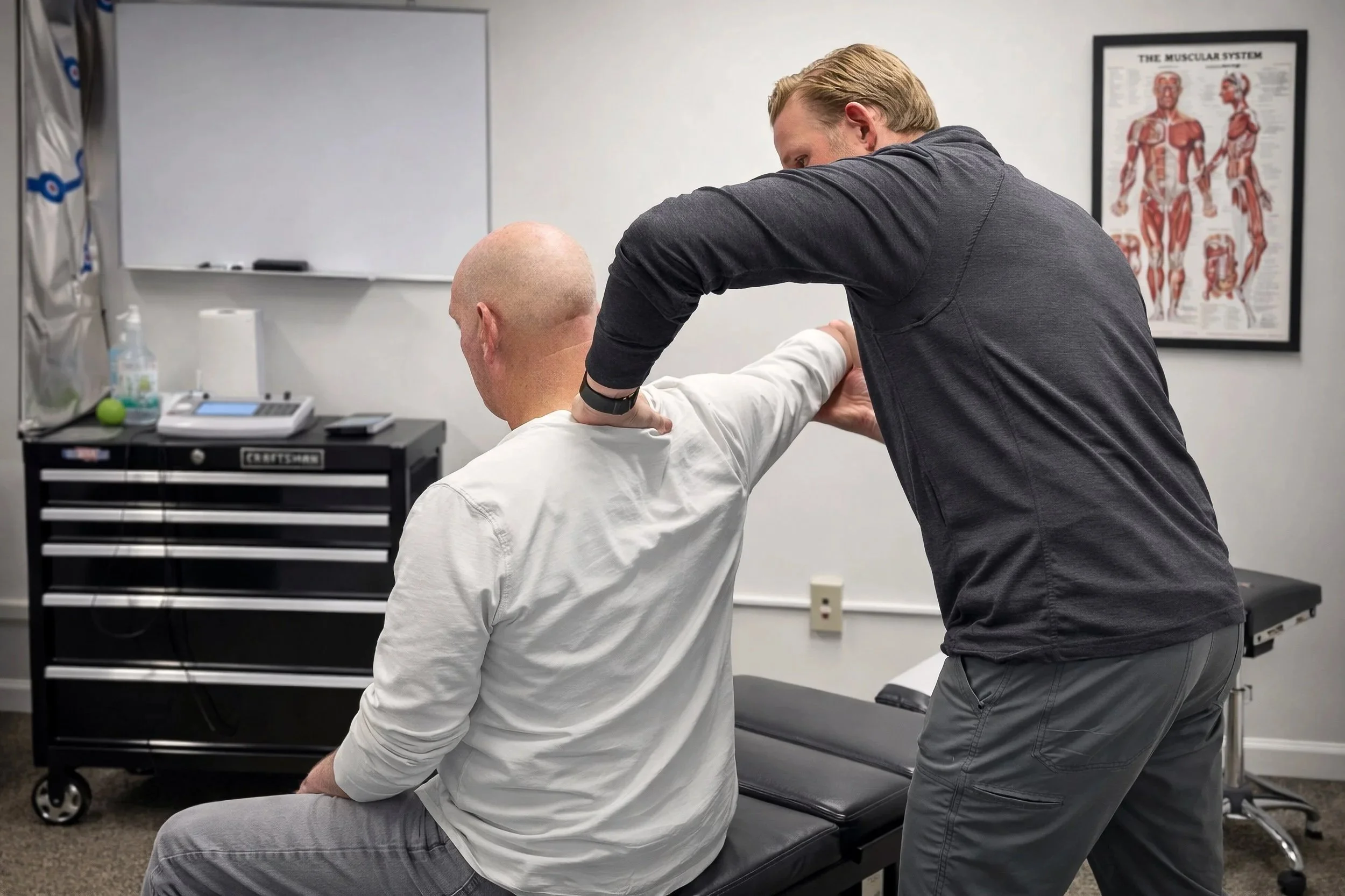
4. Financial Transparency Matters
In Saratoga, some chiropractic offices are in-network with insurance plans. Others are cash-based or self-pay.
Neither approach is better — but clarity is essential.
Most offices will verify your benefits before care begins. However, insurance companies do not always provide perfectly accurate or complete information to providers.
How To Prevent Financial Surprises
We encourage patients to be proactive and call their insurance company directly to confirm:
Whether the provider is in-network
Whether chiropractic services are covered
Whether you have a deductible
Your co-pay or co-insurance responsibility
Any visit limits or pre-authorization requirements
Even when benefits are verified, final responsibility depends on how your individual policy is written. Sometimes we don’t know that information until the claim is processed and returned to our office.
A short phone call can prevent unwanted surprises.
For those unable to visit our office, we are pleased to offer home visits.
5. Experience Shapes Application
Education is foundational. Experience shapes how that education is applied.
Some chiropractors focus primarily on:
Sports injuries
Family wellness care
Pregnancy and pediatric care
Structural correction
Neurological approaches
Disc injuries and spinal decompression
Your provider’s background influences how they assess and treat your condition.
What is My Background?
My own clinical background includes working with U.S. Track & Field and collegiate athletes. That experience continues to shape how I approach musculoskeletal injuries today.
Alignment matters more than reputation. The best chiropractor for you is the one whose focus matches your needs.
6. Communication Style Is Personal
Some patients prefer quick, efficient visits with minimal explanation.
Others want detailed conversations and a collaborative plan.
Neither preference is wrong.
But you should feel heard.
You should feel respected.
And you should understand what’s happening in your own body.
In our practice, we use a 3D computer system to explain what is going on in your condition. We also use a HIPAA complaint communication system that allows you to text or call our office even after hours.
7. Look at the Environment and Commitment to Growth
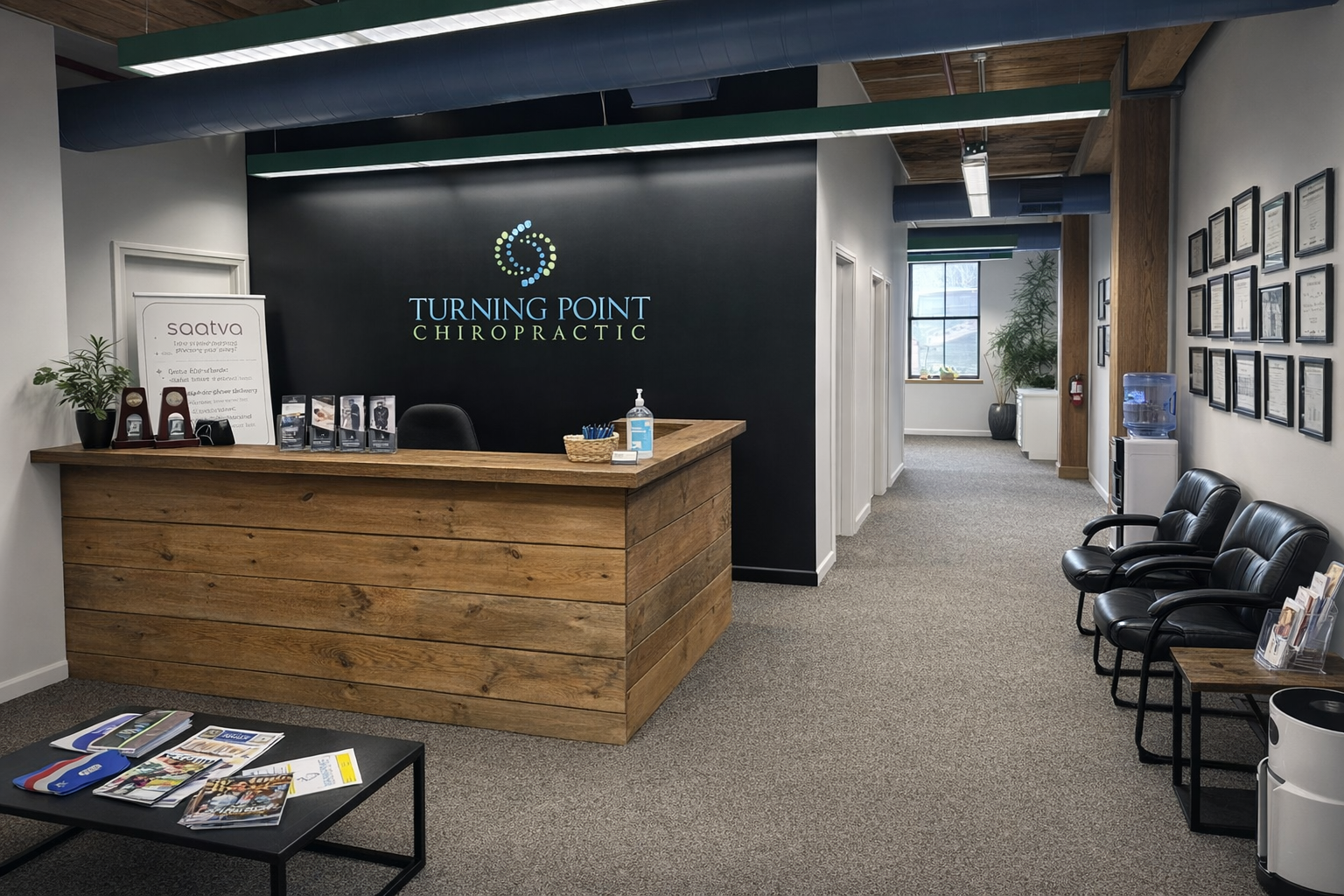
An office environment tells you a lot.
Is it clean and organized?
Does it feel current?
Is the provider pursuing ongoing continuing education?
Healthcare evolves quickly. Research changes. Treatment methods improve.
If a provider isn’t actively learning, they aren’t evolving.
And your care deserves to evolve.
8. Watch for Red Flags
Healthcare decisions should feel collaborative — not pressured.
You should feel comfortable asking questions if:
A treatment plan is recommended without a thorough exam
You’re given a long-term plan before understanding your diagnosis
You feel pressured into pre-paying for care
Your questions aren’t clearly answered
Trust your instincts.
Good care should feel clear, thoughtful, and individualized.
9. Read Reviews — But Read Them Thoughtfully
Online reviews can be helpful — but it’s important to read them carefully.
Instead of just looking at the star rating, pay attention to patterns:

Do patients mention clear explanations?
Do they talk about feeling heard?
Are results discussed?
Do reviews mention professionalism and organization?
How does the office respond to feedback?
A strong review profile isn’t just about a high rating — it’s about consistency over time.
Reading reviews can give you insight into what the patient experience is actually like.
What We Believe at Turning Point Chiropractic
At Turning Point Chiropractic in downtown Saratoga Springs, our philosophy sits in the evidence-based middle ground.
We believe in:
Thorough evaluations
Clear explanations
Individualized care plans
Honest recommendations
Combining adjustments with rehab when appropriate
Utilizing spinal decompression therapy for clinically appropriate disc cases
Empowering you to take control of your health
We don’t believe in one-size-fits-all care.
We don’t believe in rushing patients through visits.
And we don’t believe in recommending treatment that isn’t necessary.
If chiropractic isn’t the right solution, we will tell you and work to make the best referral for your needs.
For over 15 years, we’ve had the privilege of caring for not just Saratoga residents, but the greater Capital District by focusing on honest, patient-centered, evidence-based care that gets results.
Final Thoughts
There isn’t one “best chiropractor” in Saratoga.
There is a best fit for you.
Ask questions.
Understand the philosophy.
Make sure the approach aligns with your goals.
The goal is simple: that you get the care you need — from someone you trust.
Schedule Your Complimentary Consultation
If you’d like to meet us before committing to care, we offer complimentary consultations so you can decide whether our office feels right for you. You can click the button below to be brought to our easy online booking page, where you pick a time that works best in your schedule.
About the Author

Dr. Adam Favro is a chiropractor and the owner of Turning Point Chiropractic in Saratoga Springs, NY. He specializes in helping patients overcome back pain, sciatica, neck pain, and pregnancy-related discomfort using evidence-based chiropractic care and advanced technologies like the Triton DTS-6M decompression system.
Dr. Favro is known for his patient-centered approach, clear communication, and commitment to delivering honest, effective care. To learn more about Dr. Favro, check out his bio here.